Livestock & Animal Transport Crates
Every other crate we build carries something that can’t feel the trip. These ones are different. A transport crate for a living animal has to hold, ventilate, drain and calm, and it has to do it for exactly that animal, at exactly that size and temperament.
CMTP builds custom transport crates for horses, cattle, sheep, goats, dogs, cats and zoo animals, for road transport and air freight. Each crate is designed around the animal, built at the nearest of eleven Australian sites, and delivered when the movement is booked, because animals don’t wait around for packaging.
Custom livestock crates from a fifty-year-old Australian manufacturer
CMTP started in a workshop in Colac, Victoria in 1976, in the middle of farming country. It is still family owned and still run by the family that started it. Around 250 people across eleven manufacturing sites in Victoria, New South Wales, Queensland, South Australia and Tasmania build animal transport crates alongside everything else we make.
Every animal crate is close to a one-off, and one-offs are where bought-in packaging falls over. We design and build in house on our own equipment, which is the only way a horse crate, a goat crate or
a poultry crate gets sized to the animal instead of to the nearest stock crate. We measure, design around the animal, and build a prototype first where the movement is going to repeat.
Cattle crates for road transport, horse crates and livestock crates for livestock air freight, airline approved dog crates for pets flying interstate or overseas, and one-off zoo animal transport crates for anything that does not fit a category. ISPM 15 certification covers international movements, ISO 9001 quality management runs at Colac and Dandenong, and every order carries a confirmed delivery date against a 95 per cent DIFOT target. The flight does not move.
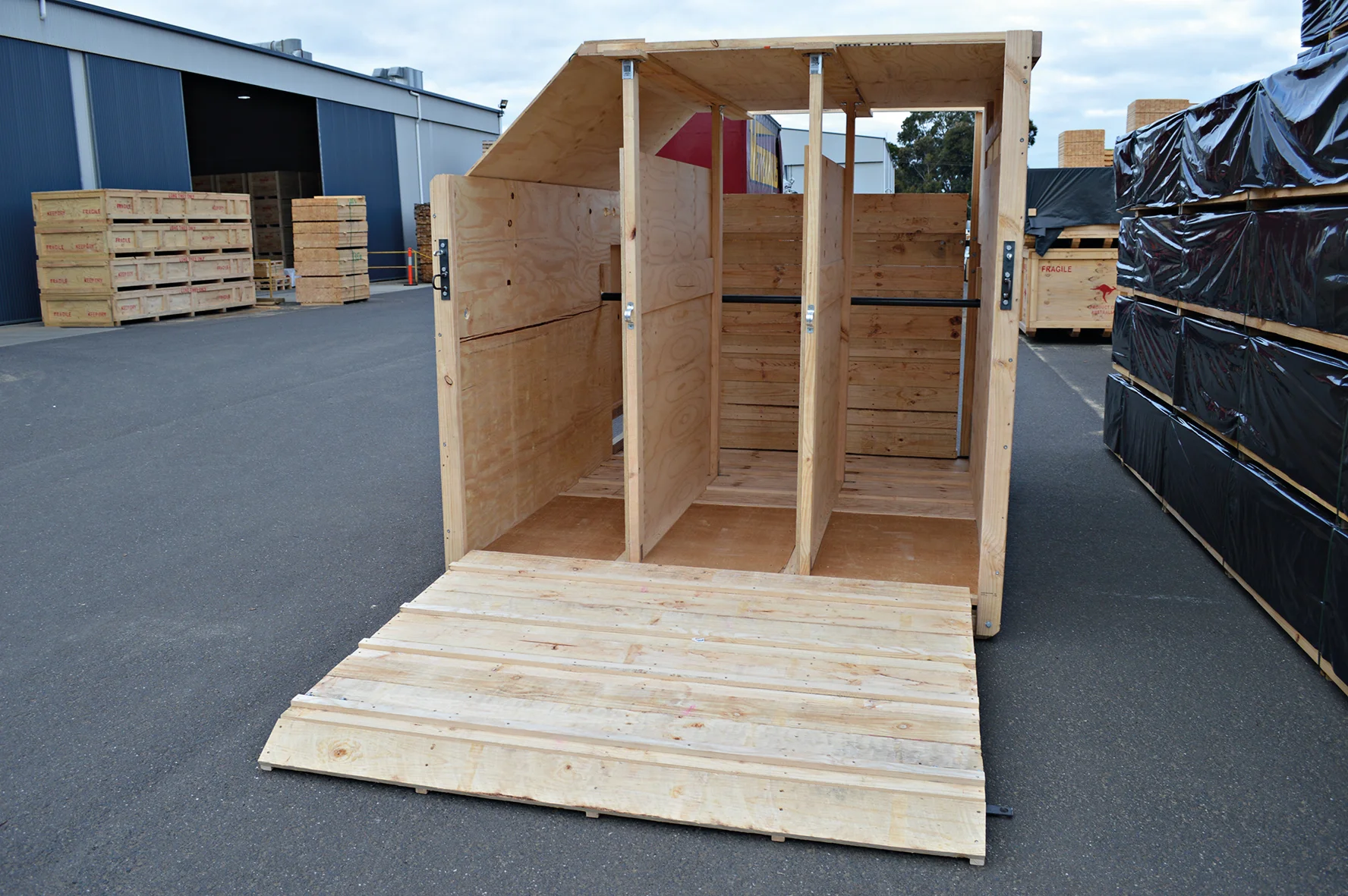
What goes wrong with animal transport crates
A crate that’s roomy for one animal is dangerous for another. Too much space and the animal gets thrown around in transit. Too little and it can’t stand or settle. Standard crates are built for an average animal, and no animal is average.
Slippery floors, protruding fixings, sharp edges and poor ventilation are how a valuable animal comes off transport lame, stressed or worse. With breeding stock and companion animals, the welfare consequences and the financial ones are the same problem.
Air freight is unforgiving: a crate that doesn’t meet the airline’s live animal requirements doesn’t fly, and the animal, the vet certificates and the whole carefully-timed movement miss the flight with it.

How CMTP solves them
Every crate starts with the actual animal: species, size, weight and temperament. Horses, cattle, sheep, goats, dogs, cats or something a zoo is moving, the crate is designed around that animal, one-offs included.
Secure footing, ventilation placed where the animal actually breathes, smooth interiors with no protrusions, and clearances that let the animal stand and settle without room to be thrown. The design detail is the welfare outcome.
Air freight crates are built to airline and IATA Live Animals Regulations requirements, and export timber is ISPM 15 compliant and individually stamped, so neither the crate nor the quarantine stamp is the reason a movement stalls.

Animal Transport Crates and Pens Built by CMTP
CMTP builds a range of timber products for animal transport

Wooden cases and crates
custom livestock and animal crates, designed per animal

ISPM 15 certified timber
compliant and stamped for international movements

Design & Engineering service
one-off and unusual animal crates, prototyped before the movement is booked
-
 ISO 9001 Certified - Colac
 -
ISO 9001 Certified - Dandenong
-
 ISPM 15 Certified
 -
 HACCP Certified
Get your obligation free quote
Related Services

Design & Engineering
crates designed around the animal, measured and prototyped

Logistics & Delivery
crates delivered against the movement date, tracked to a 95 per cent DIFOT target

Contract Packaging
our teams assemble and prepare crates at your facility where the job needs it
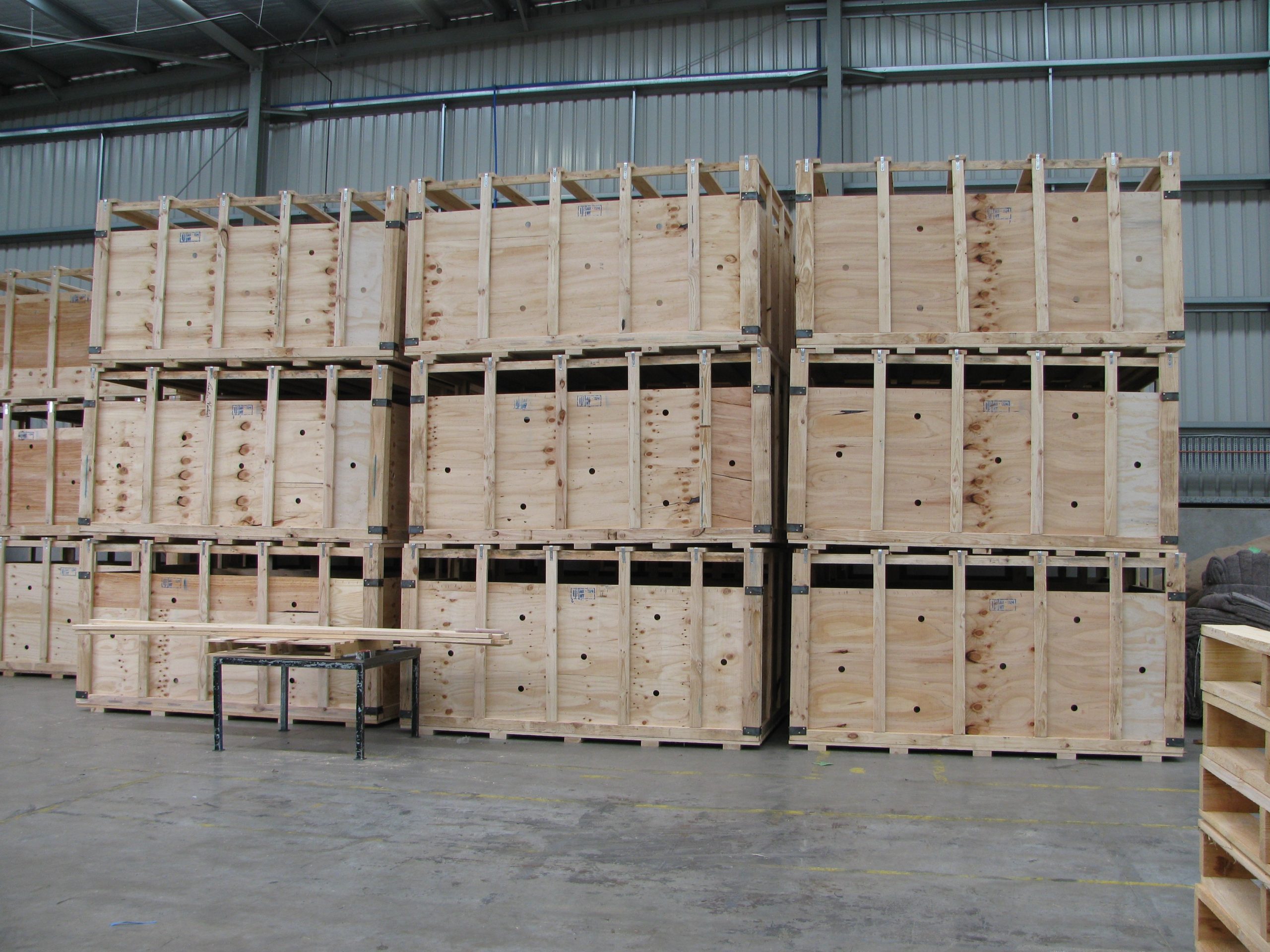
Australia-wide Service
Standard eleven-site locations block. QLD sites are Clontarf and Brendale.

Victoria
Colac – Head Office
Derrimut
Dandenong South
Mildura
New South Wales
Albury
Glendenning
Queensland
Clontarf
Brendale
South Australia
Adelaide
Tasmania
Branxholm
Scottsdale
Frequently Asked Questions
What animals do you build transport crates for?
Horses, cattle, sheep, goats, dogs, cats and zoo animals, and anything else that needs moving safely. Every crate is custom-built to the animal’s species, size, weight and temperament.
Do you make airline-approved dog crates?
We build custom timber air freight crates to airline and IATA Live Animals Regulations requirements, the heavy-duty kind used for permanent relocations and valuable animals, not off-the-shelf pet shop crates. If your dog or cat is flying, tell us the airline and the animal and we’ll build to what the movement needs.
Can you build a crate for a horse or other large animal?
Yes. Horses and cattle are exactly the animals where crate design matters most: footing, clearances, ventilation and structure built for an animal that weighs half a tonne and doesn’t like surprises.
Do animal crates meet export and quarantine requirements?
Yes. All timber is ISPM 15 compliant and individually stamped, heat treated and chemical free, and air freight crates are built to airline and IATA live animal requirements.
Can you do one-off crates for unusual animals?
Yes. One-offs are normal work for our design team, zoo animals included. We design around the animal, prototype where the movement allows, and build to the transport date.
What keeps an animal safe inside a transport crate?
Four things: footing it can grip, ventilation where it breathes, clearances that let it stand and settle without being thrown around, and an interior with nothing to catch or cut. Get those right for the specific animal and the trip becomes boring, which is the goal.
Do you keep animal crates in stock?
No. Every animal crate the team builds is made to order, sized to the animal that’s travelling in it. A crate that’s too big lets an animal get thrown around, and one that’s too small can stop it standing or turning, so building to the actual animal is the safer way to do it.
What do you need from me to quote an animal crate?
The species, the animal’s weight and its measurements: length nose to tail, height at the top of the head standing, and width at the widest point. Tell us how it’s travelling (air, road or sea), where it’s going, and which airline or carrier is moving it, since their rules can affect the design. Photos help too, especially for unusual animals.
How long does it take to build an animal crate?
That depends on the size and design, and on how busy the workshop is. Get in touch as soon as the travel date is set so the crate is ready in time for any inspections or carrier checks before the animal flies or ships.
Can the crate be used more than once?
Yes, if you ask for that up front. Breeders, zoos and owners who move animals regularly can get a crate built to last through repeat trips, with hardware that holds up to being opened and closed many times.
Can you deliver the crate to the airport or freight agent?
Yes. With sites around Australia, the team can build close to where the animal is departing from and arrange for the crate to go straight to you, your freight agent or the airport.
Talk to Us Today
Living cargo deserves a crate built for it.